A Beautiful Product from a Beautiful Time
I mastered Wagtail CMS. Spent time, read the documentation, built a couple of projects, understood the architecture. And you know what?
It's a genuinely amazing product.
Seriously. No sarcasm. Wagtail is everything a modern CMS should be:
What I liked:
- Architecture on Django — clear, predictable, no magic
- StreamField — page builder without crutches and "this isn't supported"
- Admin panel looks decent out of the box (unlike WordPress from 2005)
- Can be adapted for anything: from landing pages to multilingual corporate portals
- Open source, active community, adequate documentation
For 2012 this would have been a dream product. Beautiful CMS that covers 80% of corporate web tasks. You could make money: implement, configure, maintain.
But you know what changed since 2012?
Corporate websites died.
What Happened to Corporate Web
Lower Segment: Tilda and WordPress
Small businesses, startups, cafes, salons, consultants — everyone moved to Tilda. Or to WordPress with a $59 theme. Or to a one-pager on Carrd.
Why?
- Cheaper. $10-50/month instead of $2000-5000 for development.
- Faster. Built over the weekend, not "in final approval stage" after a month.
- Simpler. Client can change text themselves, not write to developer "please change the word on homepage".
Sad truth: Most clients don't care about "clean code", "performance" and "scalability". They need a beautiful picture that solves their psychological problem: "I have a website, I'm a serious business".
Tilda handles this better. Because Tilda is psychoanalysis, not web development:
- Templates made by designers (not programmers).
- Animations out of the box.
- "Wow effect" for clients who don't understand what backend is.
It was painful for me to realize this. But it's the truth.
Middle Segment: SaaS Platforms
E-commerce stores — Shopify. Online courses — Teachable, GetCourse. Bookings — Calendly, Acuity. Email marketing — Mailchimp, ConvertKit.
Why?
- Everything out of the box. No need for a developer, no hosting, no configuration.
- Integrations. Shopify + Stripe + Mailchimp — three clicks, and you have a funnel.
- Support. Problem? Chat with support, not "developer went to the sea, call back in a week".
Yes, SaaS costs money. But for a client $100/month is predictable, while $5000 one-time + unknown maintenance is a risk.
Upper Segment: Specialized Solutions
Large companies, banks, government portals — they have money. But they don't go to freelancers with Wagtail.
They go to:
- Agencies with portfolios of Gazprom and Sberbank.
- Enterprise CMS: Adobe Experience Manager, Sitecore, Liferay.
- Headless CMS + frontend team: Contentful, Strapi, Sanity.
Why not Wagtail? - No "Enterprise" in the name → won't pass the tender. - No "big brands in cases" → doesn't inspire trust. - No sales department that courts the customer for months.
You can be a genius developer. You can build anything on Wagtail. But you won't be allowed at the negotiation table.
Where Does Wagtail Fit Now?
Honestly? Nowhere massive.
Wagtail lives in narrow niches:
- UK government sector (NHS, GOV.UK) — historically happened that way.
- Media and publishers — there are cases, but they're rare.
- Open source enthusiasts — people who like Django and customization.
But this is not a mass market. It's not "learned Wagtail → found 10 clients".
Wagtail is a beautiful product without a market.
Like an electric car in 2000. Technically — better than gasoline. Practically — no infrastructure, clients aren't ready, more expensive and unclear.
What to Offer Clients If Not Websites?
I asked myself this question after mastering Wagtail. And realized: nobody needs websites anymore.
Not corporate. Not informational. Not "about the company".
What's needed:
- Products that solve specific problems.
- Automation that saves time/money.
- Integrations that connect disparate tools.
Here are several directions I found for myself (and testing):
1. Mobile Applications (Not Websites)
A website is passive. An application is active.
Examples:
- App for gyms (client tracking, memberships, reminders).
- Task planner for small teams (without overcomplexity like Jira).
- Calculators for narrow niches (builders, loans, calories).
Why this works: - Clients are ready to pay for problem solution, not for "beautiful storefront". - Can be sold as subscription → recurring revenue.
- Fewer competitors than in web (mobile still scares many).
2. Process Automation
What it is:
- Integrations between services (Telegram + Google Sheets + email).
- Scripts for routine tasks (parsing, reports, notifications).
- Dashboards for monitoring (analytics, metrics, alerts).
Real-life examples:
- Telegram bot that collects leads from website and sends to CRM.
- Script that collects data from 5 sources every morning and makes a report in Notion.
- Dashboard for cafe owner: revenue, stock, popular dishes.
3. SaaS for Narrow Niches
Don't build a "Notion killer". Build a solution for 100-1000 people with a specific problem.
Examples:
- Scheduler for barbershops (not beauty salons, not fitness — specifically barbershops).
- Accounting for tutors (schedule, payments, homework).
- CRM for construction crews (estimates, materials, contractors).
Why narrow niches: - Easier to find clients (they're in the same Telegram chats/forums). - Simpler to understand their pain (can talk to 5 people and learn everything). - Less competition (Salesforce won't make CRM for barbershops).
4. Games and Entertainment Content
Yes, I went into games. But not because "games are cool". But because games are a product people buy for themselves, not for business.
The gaming market is huge. Indie games on Steam, mobile games, browser games — you can find your niche.
My example:
- Developing a game on Godot (2D, casual, with strategy elements).
- Goal: release on Steam, monetize through sales.
- If it doesn't work out — experience, portfolio, and can pivot.
Plus of games: - You don't depend on clients. Your product — your responsibility. - Can scale: one game sells to thousands of people. - Creative freedom (do what you want, not what "client wants").
5. Consulting and Education
If you know how to do something — teach it to others for money.
What you can sell:
- Courses (how to launch a Django project, how to set up CI/CD).
- Consultations (architecture reviews, code reviews).
- Mentorship (1-on-1 with juniors/mids who want to grow).
Why it's profitable:
- Low entry barrier (recorded video → posted → sold).
- Recurring revenue (mentorship subscription).
- Reputation (if you do well, people recommend you).
What Should a Developer Do Now
If you, like me, realized that your main skill (making websites) is no longer in demand — don't panic.
Here's my plan:
-
Stop looking for website clients. Spending time on cold calls to companies that will go to Tilda anyway — that's self-deception.
-
Focus on products. Mobile apps, SaaS, games — anything where I control the process and can scale.
-
Learn to sell. Not code, but value. Not "I'll make you CRM on Django", but "your problem will be solved, and here's how".
-
Test ideas quickly. Don't sit for six months on "perfect product". Launch MVP in 2 weeks, show to 10 people, listen to feedback.
-
Diversify income. Part of time — on products, part — on short paid projects (automation, consulting), part — on education.
Main discovery:
The market changed. Corporate websites died. But developers didn't die. Just need to change what you offer.
Not CMS. Not websites. But solutions to specific problems for money.
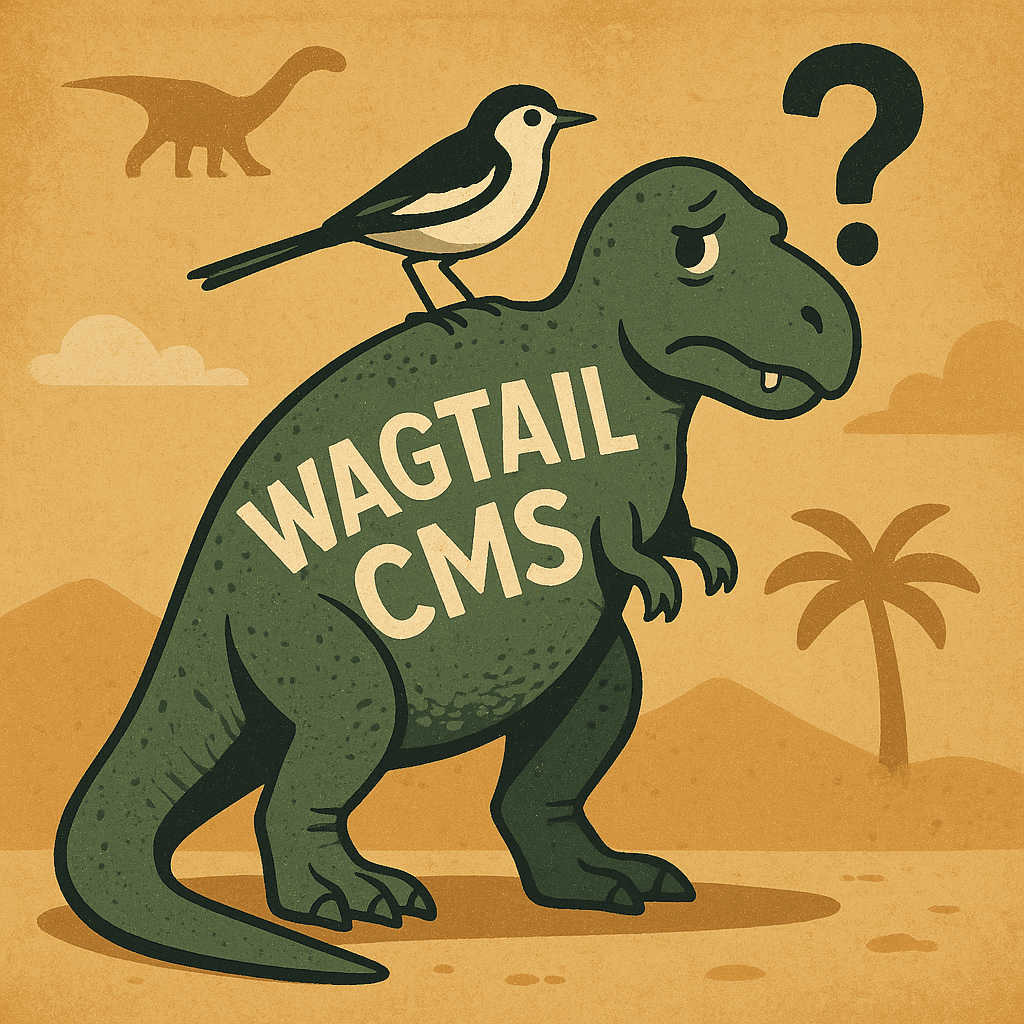
Conclusion: Wagtail — A Beautiful Dinosaur
Wagtail CMS is really a great product. If I had mastered it in 2012, I would have made money on it for years.
But in 2025 there's no market for this product. Because there's no market for corporate websites:
- Lower segment — Tilda, WordPress, builders.
- Middle segment — SaaS platforms (Shopify, Teachable, GetCourse).
- Upper segment — Enterprise solutions and agencies.
Is it a pity? Yes.
But pity doesn't pay rent. And pity doesn't develop careers.
What I'm doing instead:
- Developing mobile applications.
- Building SaaS for narrow niches.
- Making games.
- Consulting and teaching.
Not because "it's trendy". But because it's in demand. Because people are ready to pay for solutions, not for a beautiful admin panel.
P.S. If you've also mastered some technology that the market no longer needs — don't hold on to it. The market won't come back. But you can pivot.
And if you're now thinking "where should I pivot" — write to me. I'm not a guru, but I'm going through this right now. Maybe together we'll find answers.